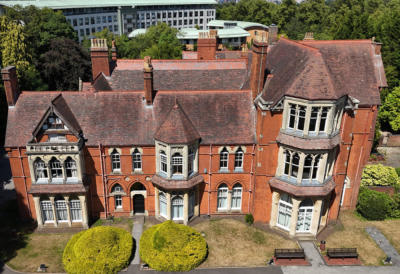
Highbury is the Moor Green home that Joseph Chamberlain had built.
By Jonathan Berg
Birmingham is a distinctive city with some approaches to
life that can be traced back through time. For example, it
has always been a place where
people are welcomed to come with
new ideas and are encouraged to
take them forward without too much
hindrance. This was very different
from other major centres and lives
on in approaches in our modern
world.
Take, for example the Georgian
period, with James Watt arriving from
Glasgow to work with Matthew Boulton and bringing his
improved steam engine into production. Similarly, John
Baskerville came from Wolverley near Worcester and
developed businesses in printing and Japanning.
In the Victorian era’s Jewellery Quarter, cousins George
and Henry Elkington developed electroplating,
while Josiah Mason came from Kidderminster
and established the world’s largest pen nib
factory. The Wouhra brothers are a twentieth
century example. Originally from New Delhi,
their West Bromwch and Aston based East End
foods spotted a major opportunity in the food
industry that they took on to become a
national brand.
North London Arrival
These are just a few examples of people
coming to a growing metropolis which, in
earlier times was in part successful because it
lacked rules and regulations, with little to
hinder those who wanted to take something forward and
make a name for themselves.
It was to this dirty and grimy industrial place of
opportunity that Joseph Chamberlain arrived from North
London in 1854 as an eighteen year old. First he helped
take forward a successful screw making business. He then
used those business skills to move into local politics, and
his work changed Birmingham in dramatic ways.
Chamberlain’s Early Life
Joseph Chamberlain was born into a middle-class family in
south London. The family business in Milk Street in the
East End was a firm of cordwainers, or shoe makers.
Joseph received a reasonable education and, after the
family moved to Highbury in north London, attended a
school linked to University College London.
His family were nonconformists and members of the
Unitarian Church, which put a strong emphasis on good
works and rejected the Trinity. At the time,
nonconformists were
denied entry to
Oxford and
Cambridge, so an
elite university
education was not an
option.
Screw Patent Rights
As an 18-year-old in
1854, Chamberlain
moved to
Birmingham to work in his uncle Mr Nettlefold’s factory. At
the Great Exhibition of 1851, John Nettlefold had seen an
American process for manufacturing improved screws.
Traditional wood screws had blunt ends, but the new
machinery could produce pointed screws that were much
easier to use. The UK rights to the patent were acquired
and Joseph’s father offered his brother-in-law £10,000 to
help fund the investment needed to bring the process into
use in the Birmingham factory.
For around twenty years Chamberlain helped make
Nettlefold and Chamberlain into a world-leading producer
of screws and fixings. In particular, Chamberlain worked
on the financial and marketing side of
the business while his cousin John
Nettlefold concentrated on expanding
factory production.
Chamberlain’s business methods
included buying competitor businesses
and introducing new marketing and
selling techniques. He showed both
opportunistic and ruthless streaks. For
example, when workers went on strike
in France, he packed screws in the
French style and moved quickly to
capture the market. Today the firm still
exists as GKN, with its office
headquarters now at the Colmore
Building in Birmingham. However
manufacturing is not done in the city anymore but rather
at sites such as Bristol and Cowes on the Isle of Wight.
Self-Improvement
Chamberlain arrived in
Birmingham at a time when
many people believed self-
improvement was the route to
education. This included the
Sunday school movement and
societies set up to encourage
learning.
Chamberlain joined the
Edgbaston Debating Society
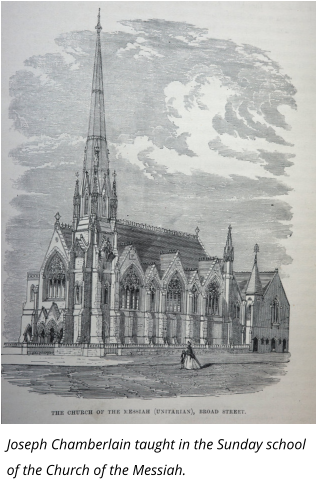
and also became a teacher in classes at the Church of the
Messiah. The church stood on the bridge over the canal
where the Black Sabbath bench is today.
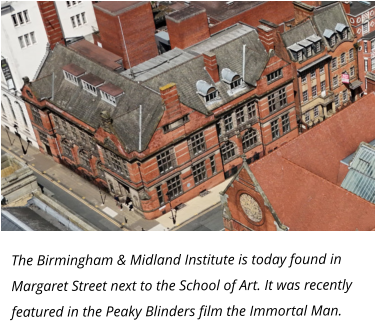
A lasting legacy of self improvement we can see today is
the Midland Institute behind the Council House in
Margaret Street. Its penny lectures, reading rooms and
classes helped bring education and new ideas within
reach of ordinary Birmingham people.
From Industry to Local Politics
Chamberlain’s time in business gave him many of the
skills he later used in his political career.
Birmingham’s success was partly due to its lack of
regulation. Even in Georgian times the town was run by
fifty Street Commissioners. The first town council only
came into being in 1838, and powers were still shared
with the Commissioners until 1854.
The town council often met in local pubs, such as the
Royal Hotel on Temple Row. The Council was strongly
influenced by the Economic Party, a group within the
Liberal Party which argued for very low spending on
public projects. It was clear that the town was in a mess
and, in 1869, Chamberlain was elected as councillor for St
Paul’s ward in the Jewellery Quarter.
Chamberlain proved
a good political
organiser and
became the leading
figure in
Birmingham’s Liberal
caucus. His belief in
education also
influenced his early
political work with the
Birmingham
Education League,
arguing for free
elementary education
for children as an
alternative to relying
on self-improvement.
This project became
the National
Education League,
whose work helped
shape the 1870
Education Act.
Birmingham Mayor
In 1873 Chamberlain became Mayor, a position he held
for three years. His work saw him apply many of the
business methods he had used at Nettlefold and
Chamberlain to taking the town forward. Birmingham,
while hugely successful as a manufacturing centre, was
struggling with basic services such as water, sewage and
with poor quality housing.
Chamberlain set about changing this, saying that by the
time he had finished as Mayor the place would not know
itself.
He needed considerable finance to take forward his many
ideas for improving the town. He saw an opportunity in
Birmingham’s two gas companies, which he brought into
council ownership. He then invested in larger gas works
,more suited to the growing needs of industry and the
people. The production of gas from coal gave
considerable profits which could be used in other areas
and especially to service council borrowing for major
improvement projects.
The council also took control of the water company during
Chamberlain’s time, although the long-term solution of
bringing water from the Elan Valley was not completed
until 1905.
The town centre slums were
cleared in a controversial
improvement scheme, with
Corporation Street designed
as a grand Parisian-style
shopping street. Criticism of
the scheme included the lack
of rehousing for many of
those driven out of the
slums.
Ideals in Terracotta
Much of the physical
development of
Chamberlain’s ideas was
taken forward by the
architectural practice of
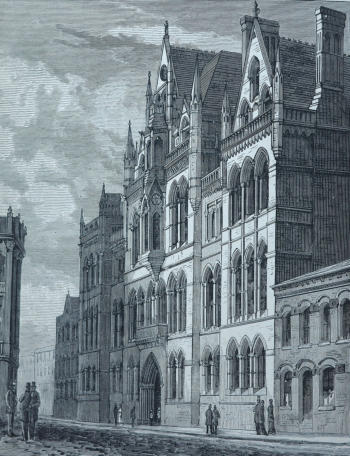
Martin and Chamberlain. Their work included Victorian
Gothic styled schools, libraries and baths with red brick
and terracotta facades. Many such buildings can still be
seen around today’s city.
The Chamberlain Memorial Fountain, which still stands in
Chamberlain Square, was also designed by Martin and
Chamberlain. Close by their finest design is considered
the School of Art in Margaret Street behind the Council
House.
Interestingly, the firm did not enter the competition for
the Council House itself. That competition was won by
Yeoville Thomason, although there was much
disagreement about the way the judging had been carried
out and his original plans were modified including the
addition of a dome.
Controversial National Politician
Chamberlain moved into national politics in 1876 and left
the post of Mayor part way through his third term. After
an unsuccessful attempt to become an MP in Sheffield, he
entered Parliament as an MP for Birmingham when
George Dixon gave up his seat for him.
Joseph Chamberlain never became prime minister,
though it was clearly an ambition. However, he held
senior office first in the Liberal government of William
Gladstone and later in the Liberal Unionist-Conservative
coalition led by Lord Salisbury.
As President of the Board of Trade under Gladstone,
Chamberlain became one of the leading radical voices in
government. However, he broke with Gladstone in 1886
over plans for Irish Home Rule, fearing that a separate
Irish parliament would weaken the United Kingdom and
the Empire. He resigned from the government and helped
form the Liberal Unionist movement.
From 1895 to 1903 he served as Colonial Secretary in
Salisbury’s government, where he became closely
associated with imperial policy and
the South African, or Boer, War.
His handling of events in southern
Africa remains controversial and is
one of the main reasons he is
remembered as both a reformer
and an imperialist.
He resigned again in 1903, this
time from the Unionist
government led by Arthur Balfour,
in order to campaign for tariff
reform and closer economic links
within the Empire. This issue split
the Unionist alliance just as Home
Rule had split the Liberals nearly
twenty years earlier.
Some historians blame
Chamberlain for helping to divide
both major parties of his day.
University of Birmingham:
Chamberlain’s Last Big Project
The University of Birmingham was
certainly the pinnacle of
Chamberlain’s drive to place
education at the heart of a
progressive city. In the 1890s he
took Mason Science College
forward and helped it gain a university charter in record
time.
He worked to raise huge sums to develop the new
university. One of the benefactors, Andrew Carnegie,
encouraged him to model it on the large campus-style
universities being developed in America. Chamberlain
sent a delegation to America to investigate and also
persuaded Lord Calthorpe to donate land on his
Edgbaston estate.
Today, the centrepiece of the UK’s first red-brick, campus-
style university is ‘Old Joe’, the landmark clock tower
named in memory of Joseph Chamberlain.
Sometimes Difficult Personal Life
Chamberlain’s personal life had its share of sadness and
he married three times. The first two marriages were to
members of the Kenrick
family. Both Harriet Kenrick
and Florence Kenrick died
following childbirth.
Florence died in 1875 after
giving birth to twins. One of
the babies was stillborn and
was buried with her.
His third wife was the
American Mary Endicott,
daughter of a wealthy and influential political family.
Chamberlain met her during a visit to Washington in 1887.
Mary became an important source of support and
companionship in his later life.
Birmingham celebrated Chamberlain’s seventieth birthday
in style but, shortly afterwards, he suffered a severe
stroke from which he never fully recovered. This affected
both his national political role and his chancellorship of
the University of Birmingham.
Austen and Neville Chamberlain
Two of Chamberlain’s sons also went into national politics.
Austen Chamberlain is best remembered for helping to
negotiate the Locarno Pact after the First World War, for
which he won the Nobel Peace Prize.
Neville Chamberlain spent time on a family business on
Andros Island in the Carribean trying to grow sisal for
rope production. This failed project cost the family some
£50,000. Returning to England he entered local and then
national politics and became prime minister in 1937.
However, he is mainly remembered for his policy of
appeasement towards Adolf Hitler and his claim of “peace
for our time” after returning from Munich in 1938. The
agreement lasted less than a year before the outbreak of
the Second World War. Some say he was buying time but
in fact it allowed Germany to invade Czechoslovakia and
add key arms
manufatoring capacity to
their war effort.
Joseph Chamberlain
Legacy
Joseph Chamberlain is
seen as someone who did
a huge amount to turn
Victorian Birmingham into
a model for other towns
and cities to follow. His
methods of running a
political party were also
copied. Chamberlain was a controversial figure in both his
business and political life, with supporters and critics
often divided in equal measure. However, Birmingham
certainly has a great deal to thank him for.
Joseph Chamberlain and
Birmingham
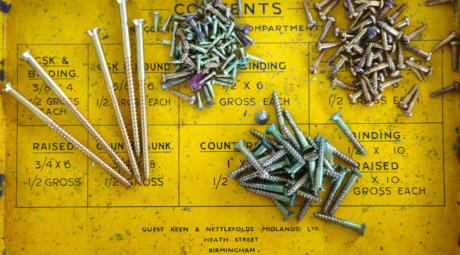
Nettlefolds eventually became the company we know today as GKN
which is headquartered in Redditch.
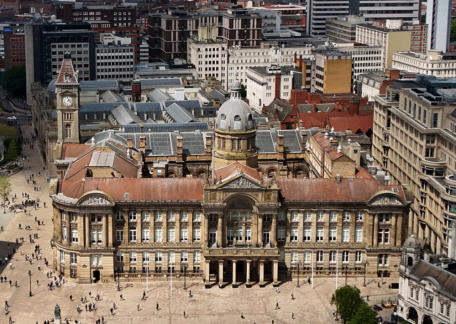
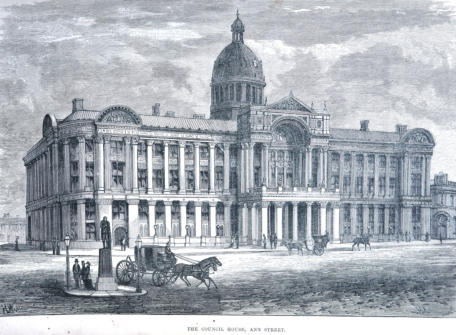
Birmingham Council House was completed in 1878. Joseph
Chamberlain laid the foundation stone in in June 1874 during
his tenure as Mayor.
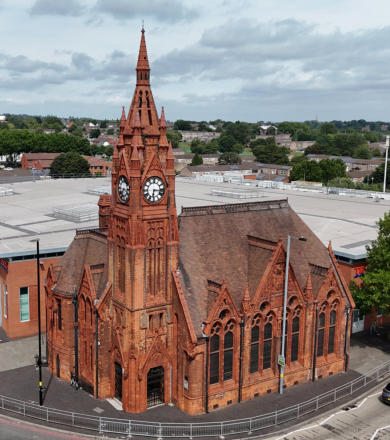
Spring Hill Library on the Dudley Road is one of many Martin &
Chamberlain designs that can still be seen around the city.
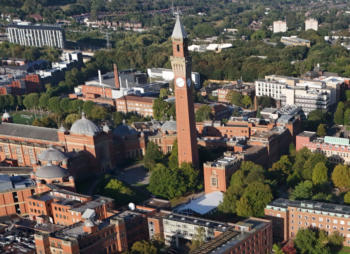
Joseph Chamberlain took over as Chairman of Josiah
Mason College in Edmund Street in 1898 and in just a
couple of years had obtained a University Charter. The
‘Old Joe’ clock tower is still the dominant feature of the
campus.
Further details
Download leaflet here….
Details of the tour here…..
Booking area with current
tours up to book here….
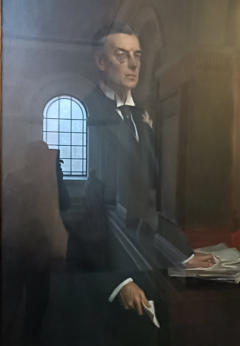
The portrait of Joseph Chamberlain in
the Council House adorned with trade
mark monocle and orchid.





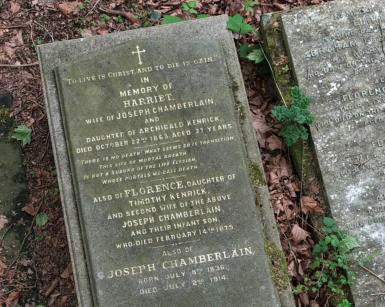
Joseph Chamberlain is buried in the non-conformist Key Hill
Cemetery in the Jewellery Quarter, along with Harriet and
Florence and her infant son.